You’re driving down a long mountain road, pressing the brake pedal repeatedly to keep your speed under control. After a while, the car seems to need more pedal pressure to slow down. The brakes that felt dependable at the top of the hill are becoming less effective.
The change has a physical explanation. Every time you brake, friction turns some of the car’s movement energy into heat. If that heat builds up faster than the braking system can release it, the brakes can start losing effectiveness.
Brake fade is a reduction in braking effectiveness caused by heat building up during repeated or prolonged braking. It can happen because the friction material loses its ability to grip effectively, or because excessive heat affects the hydraulic system that transfers your foot pressure to the brakes.
Each stop adds heat to the brakes
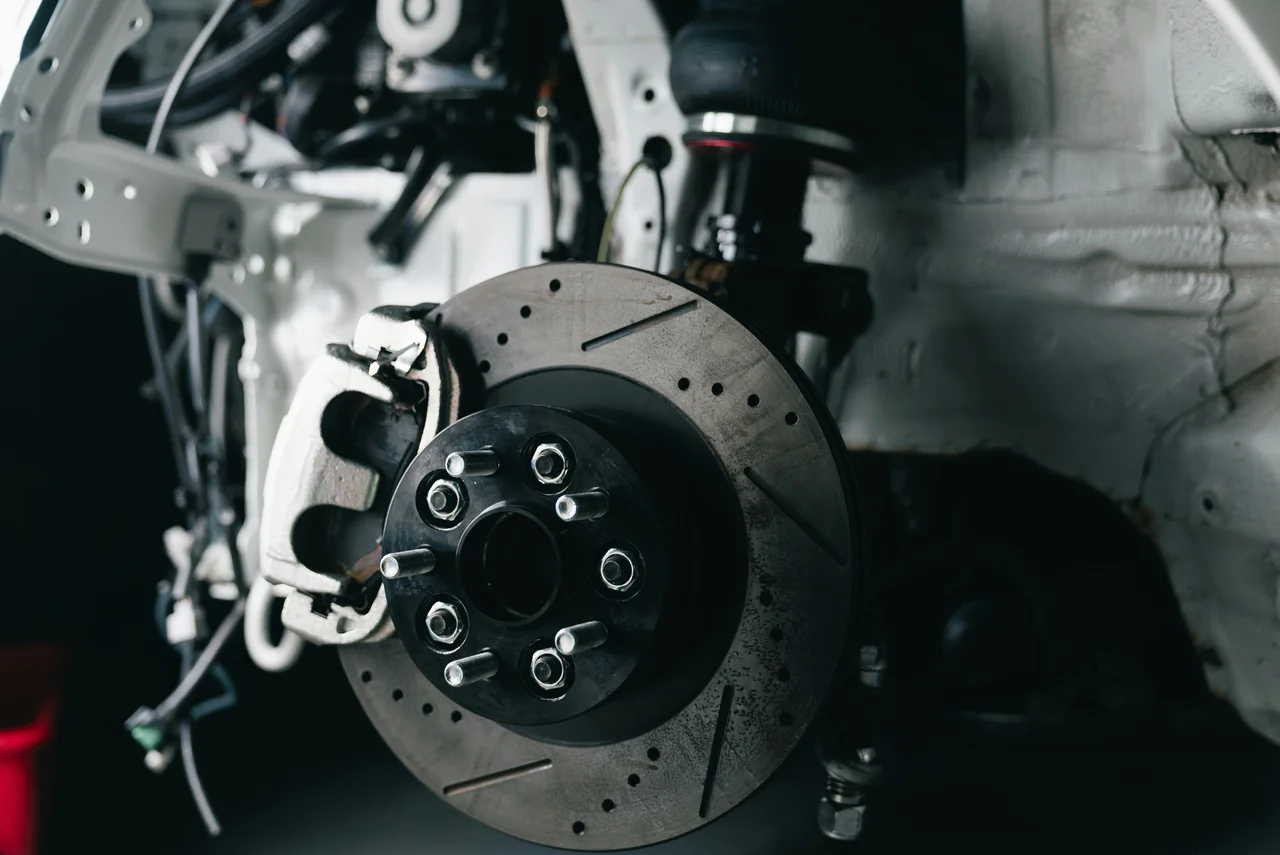
When you press the brake pedal, the braking system pushes pads against rotating discs, also called rotors. The friction between those surfaces slows the wheels and converts kinetic energy into heat.
During an ordinary stop, the brakes can release enough heat to keep functioning as expected. But repeated hard braking, a long descent, a heavy load or high speeds can increase the thermal demand.
The important part is that heat doesn’t disappear when you release the pedal. The discs, pads and surrounding components need time and airflow to cool. If another braking event adds heat before enough has escaped, temperatures continue to rise.
Eventually, the friction material may stop performing as effectively as it did when cooler.
Hot brake pads can lose their grip
Brake pads contain a mixture of materials that provide friction and hold the pad together. Many common formulations use a resin binder, and that binder’s behaviour changes as temperatures rise.
Research published in Wear has examined how temperature affects the friction and wear of organic-based brake materials. The underlying issue is that a reduction in the coefficient of friction means the same clamping force produces less braking force.
For polymer-based composite friction materials, research reports that fade can become particularly pronounced around 300 to 400°C. That is a typical range, not a universal temperature at which every pad suddenly stops working. The formulation, operating conditions and brake design all matter.
DIXCEL, a brake-component manufacturer, gives approximate fade points of 300 to 350°C for original-equipment pads and 400 to 700°C for some performance pads. These are the manufacturer’s general figures, not guarantees for every vehicle or pad.
At the wheel, the consequence is straightforward: the pads may be pressed against the disc, yet the friction they produce has fallen. You can press harder and still get less deceleration than expected.
Brake fluid can cause a different kind of fade
There is another way excessive heat can interfere with braking.
Your foot doesn’t push the pads directly against the discs. In a conventional hydraulic braking system, the master cylinder pressurizes brake fluid, which transmits that pressure through the lines to the brakes at the wheels.
Brake fluid is designed to withstand high temperatures. But if it gets hot enough to boil, vapour can form in the hydraulic system. Unlike liquid brake fluid, that vapour is compressible. Some of your pedal movement can compress the vapour instead of transmitting pressure effectively to the brakes.
This is commonly described as fluid fade or vapour lock.
The difference is useful when understanding the symptoms. With friction fade, the pedal may still feel relatively firm even though the car isn’t slowing as effectively. With fluid fade, the pedal can feel soft or spongy because the hydraulic system is no longer transferring pressure as intended.
These descriptions are clues, not a reliable diagnosis. Different brake faults can produce overlapping symptoms.
Why the distinction matters
Both problems involve heat, but they affect different parts of the braking process.
Friction fade reduces the braking force produced where the pads meet the discs. Fluid fade interferes with the hydraulic pressure that makes the pads clamp onto the discs in the first place.
They can also occur under similar conditions. A long descent can heat the friction surfaces while transferring heat into other brake components. The condition of the fluid and the materials used in the pads influence how the system responds.
Cooling down may allow some friction materials to recover their effectiveness. But that doesn’t mean every overheating event leaves the system unharmed. Severe heat can damage components, and overheated or boiled brake fluid may need professional attention.
What happens on a long descent?
Return to that mountain road. Each application of the brakes adds heat, and repeated braking can prevent the system from cooling sufficiently between applications.
The result may be less stopping power, even though you’re still pressing the pedal. If the hydraulic fluid also overheats, the pedal feel can change as well.
Brake fade is therefore a warning about the system’s ability to manage heat, not a problem that should be judged by pedal feel alone. If the brakes suddenly become less effective, treat the situation as an emergency, focus on bringing the vehicle to a safe stop, and seek professional assistance rather than continuing to drive.
The next time you hear about brake fade on a long descent, remember the two places heat can interfere: the friction between the pad and disc, and the fluid that transfers pressure to them.
Short answers
Sources
DIXCEL Co., Ltd.. What is fade resistance? (opens in a new tab), dixcel.co.jp, .
Defines brake fade and provides approximate fade-temperature ranges for original-equipment and performance brake pads.
SAE International. Mechanism of Brake Fade in Organic Brake Linings (opens in a new tab), saemobilus.sae.org, .
Documents experimental investigation of brake fade mechanisms in organic brake lining materials.
Ontario Ministry of Transportation. Demands on Brakes While Driving (opens in a new tab), ontario.ca.
Explains how overheated brake components lose effectiveness, particularly during long descents.
Ford. How is brake fluid added? (opens in a new tab), ford.com.au.
Explains how overheated brake fluid can form vapour, reducing hydraulic pressure transmission.