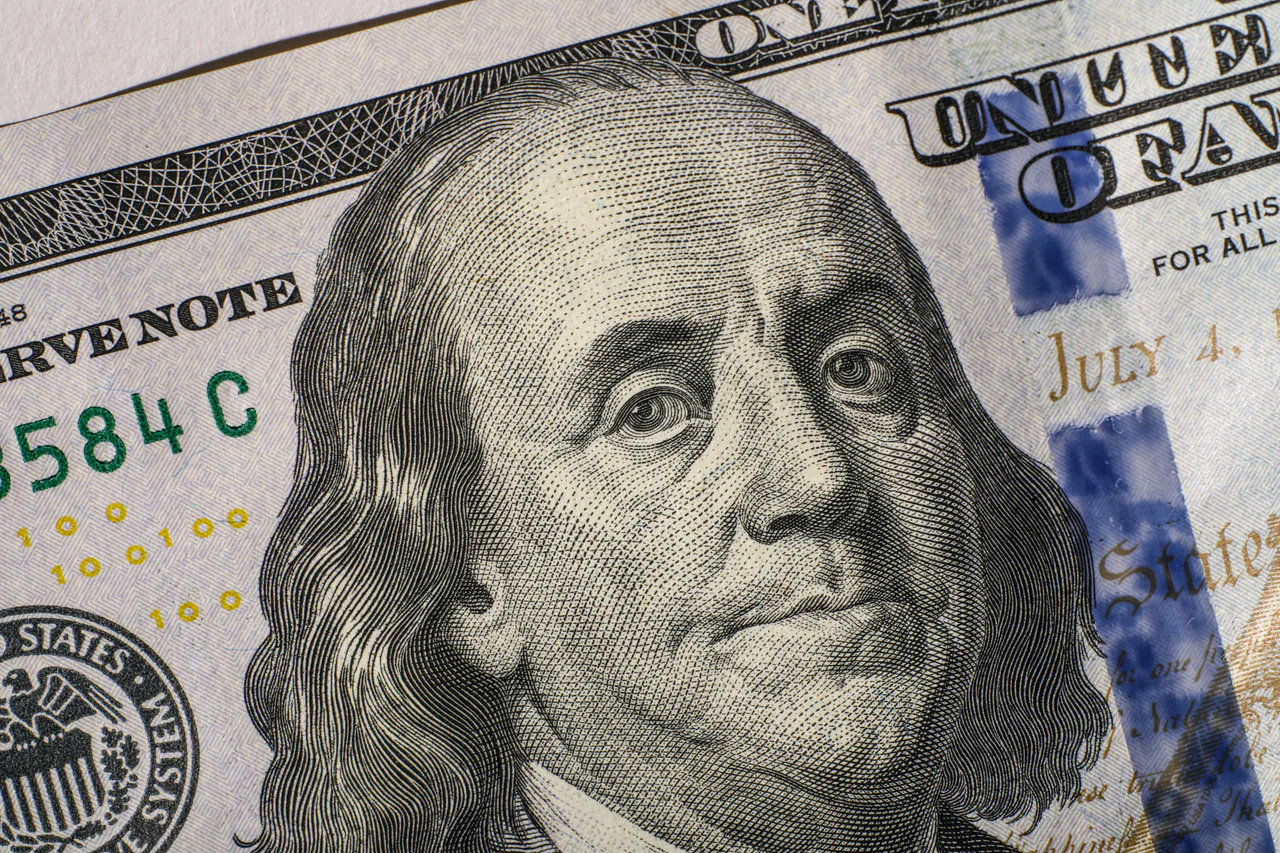
In 2002, a PhD student at the University of Cambridge named Markus Kuhn put a 10-euro banknote on a Xerox colour photocopier and pressed start. The machine refused. It printed a message in several languages telling him that copying money is illegal. Kuhn examined the note and found a pattern of five small circles arranged like the constellation Orion. He named it the EURion constellation, and his discovery is the reason your office copier will not touch a banknote.
A photocopier fails to copy money because of four separate barriers: the paper is not wood pulp, the ink is raised above the surface, the EURion constellation tells the software to stop, and a second, secretive system called the Counterfeit Deterrence System blocks the image at a deeper level. Each barrier alone would be enough to stop a casual attempt. Together, they make a photocopy worthless.
The paper is not paper
Ordinary paper is made from wood pulp. A banknote is not. The Bureau of Engraving and Printing, the agency that produces U.S. currency, states that currency paper is composed of 75 percent cotton and 25 percent linen. It is made specifically for the BEP by Crane Currency in Dalton, Massachusetts, and it is illegal for anyone other than the BEP to possess it.
That composition changes how the paper behaves in a photocopier. Wood pulp paper contains lignin and other compounds that fluoresce under ultraviolet light. Cotton and linen do not. A photocopier’s sensors can detect that difference. The paper also feels different. The BEP says it would take about 4,000 double folds, first forward and then backwards, before a note will tear. That durability comes from the long cotton and linen fibres. Wood pulp fibres are shorter, and they break down faster.
The BEP’s “How Money is Made” page explains that the paper contains red and blue fibres distributed randomly throughout the sheet, which makes imitation more difficult. Paper for the $5 bill and above is made with specific watermarks and security threads embedded in the sheet during papermaking. A photocopier cannot reproduce any of that. It can only lay toner on the surface of whatever paper you feed it.
The ink sits on top of the paper, not in it
Most printing presses press ink into the paper. Intaglio printing does the opposite. The image is engraved into a metal plate, the plate is inked, and the paper is pressed against it under high pressure. The ink is lifted out of the grooves and deposited on the paper in a raised layer.
The European Central Bank describes intaglio as “raised printing” that “produces a tactile effect” used in the main image and other parts on the front of the banknote. Run your finger across the portrait on a euro note or the numerals on a U.S. note and you can feel the ridges. A photocopier cannot create that. It prints a flat layer of toner. The BEP’s page on how money is made notes that each print technology leaves a unique fingerprint on how the ink transfers and lays on the substrate, and that fingerprint is part of the security.
The U.S. government’s currency education site, uscurrency.gov, explains that security threads and microprinting were introduced specifically to deter counterfeiting by copiers and printers. Microprinting is text so small that it appears as a thin line to the naked eye but can be read under a magnifying glass. A photocopier’s resolution is not high enough to reproduce it legibly.
The EURion constellation tells the software to stop
The EURion constellation is the barrier most people have never heard of. It consists of five small circles, usually yellow, green, or orange, arranged in a pattern that resembles the Orion constellation. The circles are repeated across the banknote in different orientations and hidden within the design. On some U.S. bills, they appear as the digit zero in small yellow numbers. On Japanese yen, they sometimes appear as flowers.
The Duke University collection that hosts Kuhn’s original write-up explains that the mere presence of five of these circles on a page is sufficient for some colour photocopiers to refuse processing. The pattern was added to banknotes starting around 1996. It is not a visual security feature for humans. It is a machine-readable signal for imaging software.
When a photocopier’s scanner detects the constellation, the firmware stops the job. Adobe Photoshop and other image editing programs do the same. They detect the pattern and refuse to open the file. The algorithms behind those decisions are not publicly documented, but the effect is consistent: you cannot scan, copy, or open a banknote image in most commercial software.
There is a second system you cannot see
The EURion constellation is only part of the story. The Central Bank Counterfeit Deterrence Group, a working group of 32 central banks and note printing authorities organised at the request of the G10 central bank governors, developed a more comprehensive system called the Counterfeit Deterrence System, or CDS.
The Bank for International Settlements announced in 2004 that the CBCDG had developed the CDS to prevent personal computers and digital imaging tools from capturing or reproducing the image of a protected banknote. Several leading hardware and software manufacturers adopted it voluntarily. The CDS does not track users. It does not affect printer or scanner performance in any other way. It simply blocks the reproduction of protected banknotes.
The rulesforuse.org website, which is maintained by the CBCDG, states that the CDS consists of anti-counterfeiting technologies that prevent personal computers and digital imaging tools from capturing or reproducing the image. Independent third-party testing confirmed that the CDS does not affect individual privacy. It is not spyware. It is a filter.
The details of how the CDS detects banknotes are not public. The BIS release says the technology prevents capture or reproduction but does not describe the detection method. The CBCDG’s FAQ says the system was developed solely to prevent unauthorised reproductions and does not track usage. Beyond that, the group is silent. The EURion constellation might be part of the CDS, or the CDS might use entirely different patterns. No one outside the central banks and the manufacturers who implemented it knows for certain.
What a copy would look like anyway
Suppose you bypassed the paper, the ink, the constellation, and the software. Suppose you fed a banknote into a copier that had been modified to ignore every barrier. What would come out?
A flat, dull, wrong-feeling rectangle. The colours would be approximate. The fine lines of the engraving would blur into a grey smear. The raised intaglio ink would be missing, so the note would feel smooth and dead. The security thread embedded in the paper would not appear. The watermark would be absent. The microprinting would be illegible. The red and blue fibres scattered through the sheet would be invisible or would appear as random noise.
The Federal Reserve’s 2025 currency budget puts the variable printing cost of a $100 note at 11.3 cents. A $1 note costs 4.1 cents. That is the cost of a genuine note produced with all the security features intact. A photocopy costs almost nothing, and it is worth exactly that.
What still is not known
The EURion constellation is documented. The intaglio process is described in central bank publications. The cotton-linen composition of the paper is stated on the BEP’s own website. But the Counterfeit Deterrence System remains opaque. The CBCDG confirms that it exists, that it was voluntarily adopted by manufacturers, and that it does not track users. It does not explain how it detects a banknote.
That gap is intentional. The central banks that developed the CDS have an interest in keeping the detection methods secret, because a counterfeiter who knew exactly which patterns triggered the system could design around them. The BIS release from 2004 notes only that the technology prevents capture or reproduction. The rulesforuse.org FAQ answers questions about privacy and performance but says nothing about the technical mechanism.
The result is a system that works in practice and is understood in outline. You know your copier will not copy money. You know the paper is wrong, the ink is raised, and the constellation is there. You do not know exactly what the software sees when it refuses. For a security feature, that is probably the right balance.
Quick questions
Sources
Bureau of Engraving and Printing. FAQs (opens in a new tab), bep.gov.
Supports the 75 percent cotton and 25 percent linen composition, the 4,000 double folds durability figure, and the one-gram weight of a note.
Bureau of Engraving and Printing. The Buck Starts Here: How Money is Made (opens in a new tab), bep.gov.
Supports the paper composition, the red and blue fibres, the role of Crane Currency, the intaglio printing process, and the layered security approach.
Federal Reserve. How much does it cost to produce currency and coin? (opens in a new tab), federalreserve.gov, .
Supports the 4.1 cents per $1 note and 11.3 cents per $100 note variable printing costs.
European Central Bank. Quick Guide to the Security Features of Euro Banknotes (opens in a new tab), ecb.europa.eu.
Supports the description of intaglio or raised printing as a tactile security feature, and the feel of cotton banknote paper.
Markus Kuhn. The EURion Constellation (opens in a new tab), University of Cambridge Computer Laboratory, .
Supports the discovery of the EURion constellation on the 10-euro note, the five-circle pattern, and the initial observation that a Xerox photocopier refused to copy the note.
Duke University. Steganography: The EURion Constellation (opens in a new tab), people.duke.edu.
Supports the description of the constellation as five circles arranged like Orion, the presence of the pattern on multiple currencies, and the note that some copiers are sensitive while others are not.
Bank for International Settlements. Central banks and technology industry join to combat banknote counterfeiting (opens in a new tab), bis.org, .
Supports the development of the Counterfeit Deterrence System by the CBCDG, the voluntary adoption by hardware and software manufacturers, and the statement that the CDS does not track users.
Central Bank Counterfeit Deterrence Group. Frequently Asked Questions (opens in a new tab), rulesforuse.org.
Supports the mission of the CBCDG, the description of the CDS as anti-counterfeiting technologies that prevent reproduction, the 32 central bank membership, and the confirmation that the CDS does not affect privacy.